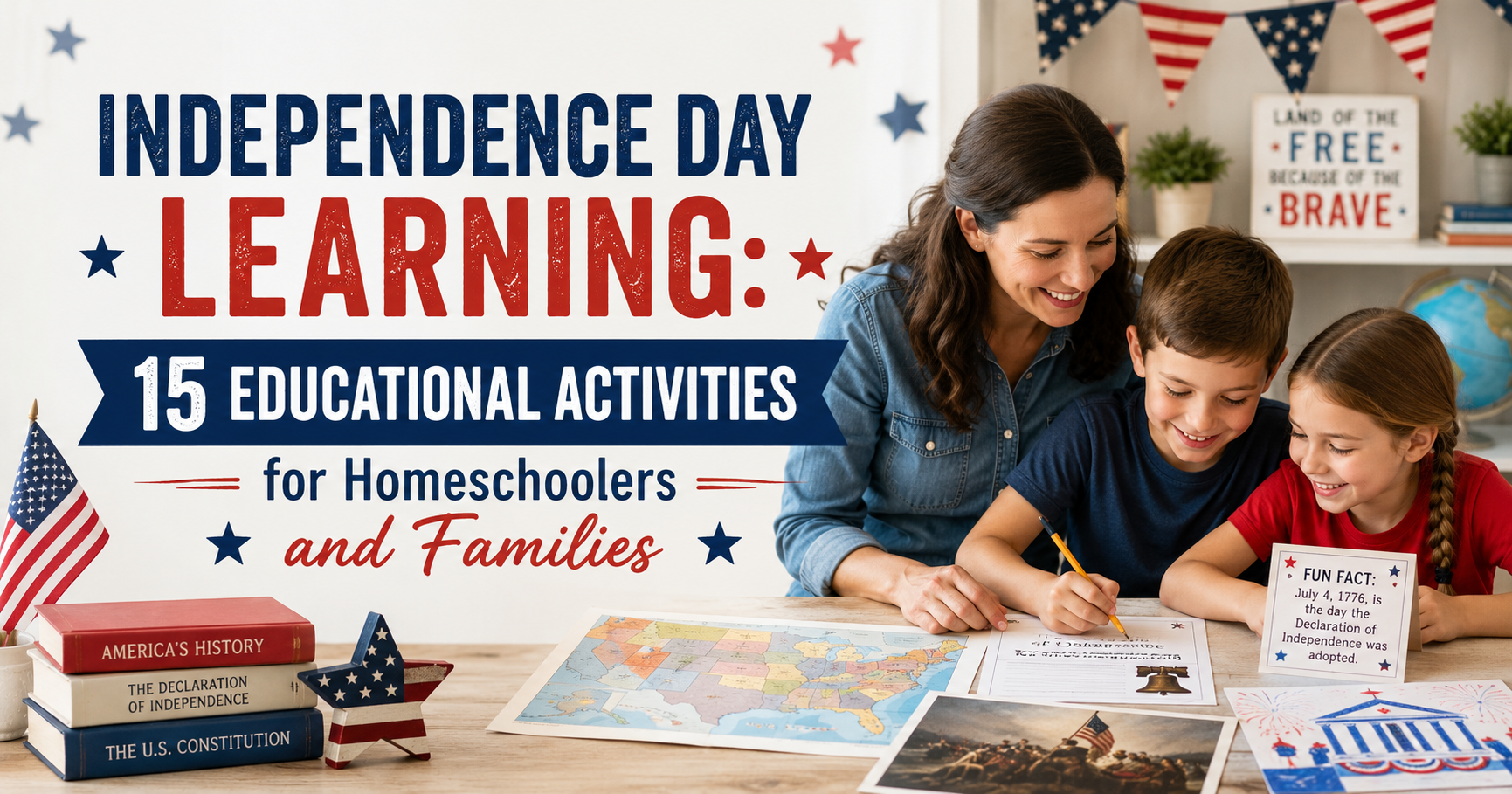
Every year on 4th July, families across the United States celebrate Independence Day with parades, fireworks, food, and community events. While the day is often associated with celebrations, it also provides an opportunity for children to explore history, geography, citizenship, culture, and critical thinking through meaningful learning experiences. Whether you are a homeschooling family, home educator, teacher, or parent looking for enriching summer activities, Independence Day offers countless opportunities to combine fun with education. In this guide, you’ll find 15 educational Independence Day activities that help children learn about history, government, geography, culture, literacy, and creativity while developing important skills along the way.
What Is Independence Day?
Independence Day is celebrated in the United States on 4th July each year. It marks the adoption of the Declaration of Independence in 1776, when the thirteen American colonies declared independence from Great Britain.
Although Independence Day is an American holiday, it provides an excellent opportunity for children around the world to learn about:
Historical events
Democracy and government
National identity
Citizenship
Geography
Cultural traditions
Historical research
Learning about important events from different countries helps children develop global awareness and understand how nations and societies evolve over time.
Why Teach Children About National Celebrations?
National celebrations offer much more than historical knowledge.
They encourage children to:
Explore different cultures and traditions
Develop research skills
Understand historical timelines
Compare countries and societies
Build critical thinking skills
Learn about citizenship and community
When children investigate how and why celebrations take place, they begin to understand the values, beliefs, and events that shape different countries around the world.
1. Create an Independence Day Timeline
One of the best ways to understand history is through timelines. Challenge children to research key events leading up to American independence and place them in chronological order.
Include:
The Boston Tea Party
The First Continental Congress
The Declaration of Independence
The American Revolutionary War
George Washington becoming president
This activity develops research, sequencing, and historical understanding.
2. Compare Independence Days Around the World
Many countries celebrate their own independence days. Invite children to investigate:
India
Pakistan
Canada
Mexico
Australia
Ghana
Questions to explore:
Why is the day celebrated?
When is it celebrated?
How do people celebrate?
What traditions are involved?
This activity develops geography and global citizenship skills.
3. Design Your Own Flag
Flags often represent a country’s history, values, and identity. Ask children to design a flag representing:
Their family
Their community
Their homeschool group
Their personal values
Encourage them to explain the meaning behind each colour, symbol, and design choice.
4. Write a Newspaper Report from 1776
Imagine you are a journalist living in Philadelphia in 1776. Children can write a newspaper article reporting on the signing of the Declaration of Independence.
Include:
Headlines
Interviews
Historical facts
Eye-witness accounts
This combines literacy with historical understanding.
5. Explore the Geography of the United States
Locate:
The original thirteen colonies
Major rivers
Mountain ranges
State capitals
Older children can investigate how geography influenced settlement, trade, and expansion.
6. Host a Declaration Debate
Ask children:
“What makes a society fair?”
“What rights should people have?”
“What responsibilities come with freedom?”
These discussions help children develop critical thinking, reasoning, and communication skills.
7. Create a Historical Fact File
Choose an important figure from the American Revolution.
Possible choices include:
George Washington
Thomas Jefferson
Benjamin Franklin
Abigail Adams
Alexander Hamilton
Research:
Early life
Achievements
Challenges
Legacy
Present findings in a fact file or poster.
8. Build a Colonial Settlement
Using recycled materials, LEGO, cardboard, or craft supplies, challenge children to build a model colonial town.
Consider:
Homes
Farms
Shops
Roads
Meeting places
This combines history with design and technology.
9. Learn About Symbols of the United States
Research national symbols such as:
The Bald Eagle
The Statue of Liberty
The Liberty Bell
The White House
Discuss why nations use symbols and what they represent.
10. Write an Independence Day Speech
Children can imagine they are leaders addressing a nation. Encourage them to write a speech about:
Freedom
Equality
Community
Responsibility
This develops persuasive writing skills.
11. Explore Historical Maps
Compare modern maps of the United States with maps from the eighteenth century.
Discuss:
What has changed?
What remains the same?
How have borders evolved?
Map skills are an important part of geography education.
12. Create a Patriotic Poetry Collection
Children can write:
Acrostic poems
Shape poems
Rhyming poems
Free verse poetry
Themes might include freedom, community, courage, or celebration.
13. Investigate Fireworks Through Science
Fireworks provide a fascinating STEM learning opportunity.
Research:
How fireworks work
Why different colours appear
Chemical reactions involved
Children can create diagrams or presentations explaining the science behind fireworks displays.
14. Cook a Historical Recipe
Explore foods that might have been eaten during the colonial period. Children can:
Compare historical and modern recipes
Measure ingredients
Learn about food production in the eighteenth century
This combines history, maths, and life skills.
15. Create a Freedom and Rights Poster
Older children can investigate:
Human rights
Children’s rights
Responsibilities of citizens
Challenge them to create a poster explaining why rights and responsibilities work together.
Extending Learning Beyond Independence Day
One of the most valuable lessons children can learn is that history is interconnected. Independence Day can lead to investigations into:
Democracy
Government systems
World history
Geography
Citizenship
Human rights
Cultural traditions
By connecting learning across subjects, children gain a deeper understanding of how historical events continue to influence modern society.
Independence Day provides a rich opportunity for meaningful learning that goes far beyond fireworks and celebrations. Through research projects, creative writing, geography investigations, STEM activities, and thoughtful discussions, children can develop a deeper understanding of history while strengthening literacy, critical thinking, and problem-solving skills.
Whether you’re homeschooling full-time, supporting learning during the summer holidays, or simply looking for engaging educational activities, these Independence Day learning ideas can help transform a national celebration into an unforgettable learning experience.
At Quality First Education, we believe that meaningful learning happens when curiosity, creativity, and knowledge come together. National celebrations offer the perfect opportunity to explore the world, ask questions, and inspire lifelong learning.