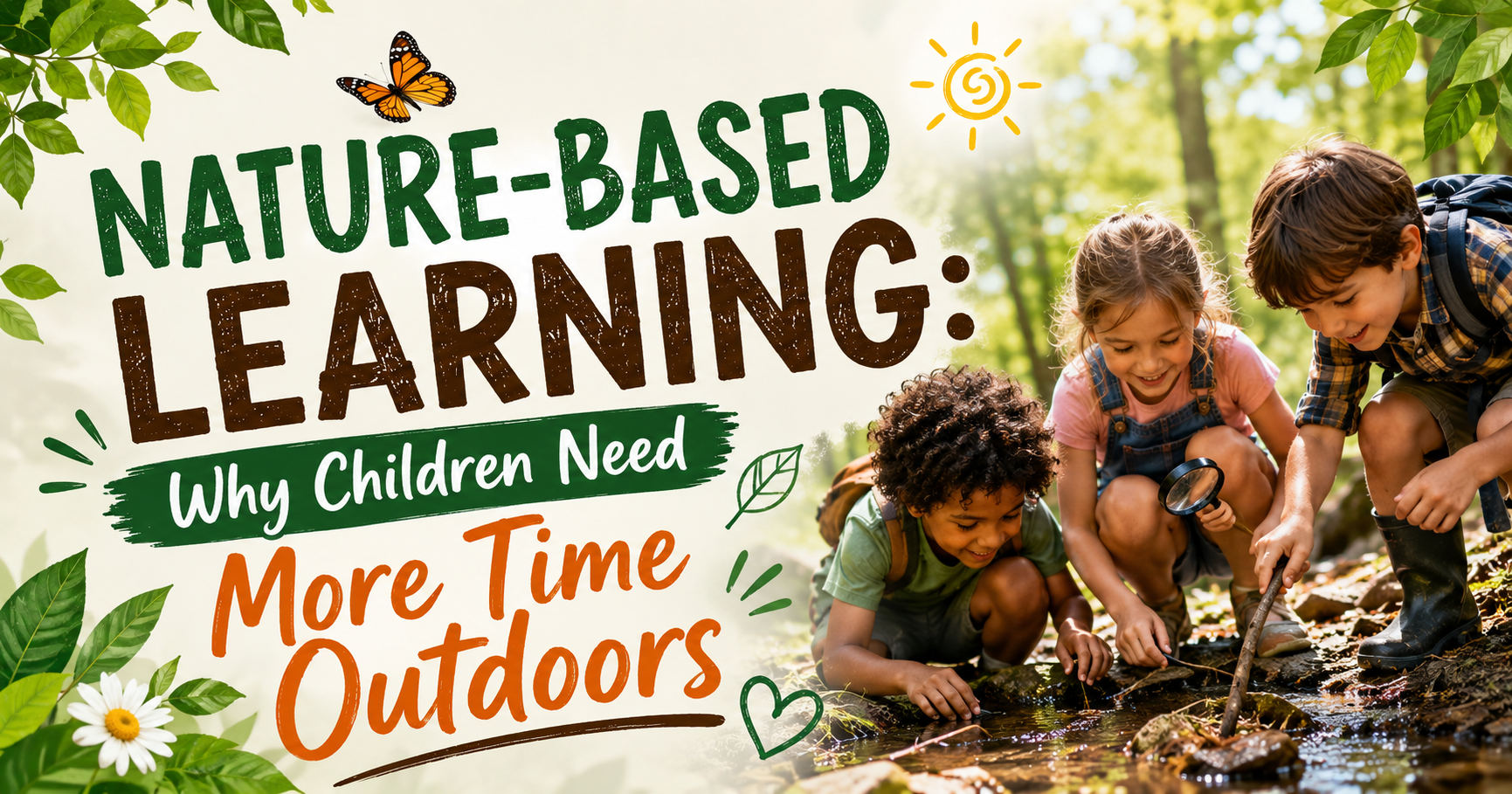
Between school, homework, extracurricular activities, screens, and busy family schedules, many children have fewer opportunities to explore nature, climb trees, build dens, observe wildlife, or simply spend time outdoors. At the same time, growing research suggests that regular contact with nature plays an important role in children’s physical health, emotional wellbeing, cognitive development, and learning. Nature is not simply a backdrop for play. It is one of the most powerful learning environments available. Whether it is a local park, woodland, beach, garden, nature reserve, or even a small green space, spending time outdoors provides opportunities for exploration, curiosity, creativity, and discovery that are difficult to replicate indoors. For parents, educators, and home educators, understanding the benefits of nature-based learning can help create richer and more meaningful learning experiences for children.
What Is Nature-Based Learning?
Nature-based learning refers to educational experiences that take place in natural environments or use nature as a central part of learning. This might include:
Nature walks
Outdoor investigations
Forest school activities
Wildlife observation
Gardening
Beach schooling
Outdoor art
Environmental projects
Rather than separating learning from the real world, nature-based learning encourages children to interact directly with their environment. Children learn by observing, questioning, exploring, experimenting, and reflecting.
Why Modern Children Spend Less Time Outdoors
Researchers have identified several factors contributing to reduced outdoor experiences. These include:
Increased screen time
Busy schedules
Safety concerns
Urbanisation
Reduced access to green spaces
Structured activities replacing free play
Many adults can recall spending hours outdoors as children. Today’s children often experience far fewer opportunities for independent outdoor exploration. This shift has prompted growing interest in the importance of reconnecting children with nature.
Nature Supports Physical Health
One of the most obvious benefits of outdoor learning is movement. Outdoor environments encourage children to:
Walk
Run
Climb
Balance
Jump
Explore
Physical activity supports:
Cardiovascular health
Muscle development
Coordination
Balance
Motor skills
Unlike structured exercise, outdoor movement often feels natural and enjoyable. Children are frequently so engaged in exploration that they do not realise how active they are being.
Nature Improves Attention and Concentration
Many parents notice that children seem calmer and more focused after spending time outdoors. Research supports this observation. Attention Restoration Theory suggests that natural environments help restore mental focus. Modern life places constant demands on attention. Children must concentrate in classrooms, process information, follow instructions, and navigate distractions. Nature provides a different type of stimulation. The sights, sounds, and patterns found in natural environments gently capture attention without overwhelming the brain. As a result, children often return from outdoor experiences feeling refreshed and ready to learn.
Outdoor Learning Supports Mental Wellbeing
Children experience stress too. Academic demands, social pressures, family changes, and busy schedules can all affect wellbeing. Research has linked time spent in nature with:
Reduced stress
Improved mood
Greater emotional wellbeing
Increased feelings of calm
Lower anxiety levels
Natural environments can provide opportunities for relaxation, reflection, and emotional regulation. For many children, outdoor spaces offer a sense of freedom that is difficult to find elsewhere.
Nature Encourages Curiosity
Curiosity is one of the most powerful drivers of learning. Nature naturally invites questions.
Children wonder:
Why do leaves change colour?
Where do insects live?
How do birds build nests?
Why do tides change?
What makes a rainbow appear?
Unlike worksheets with predetermined answers, nature often presents open-ended questions. These questions encourage investigation, research, observation, and critical thinking. Many scientific discoveries began with curiosity about the natural world.
Nature Develops Observation Skills
Strong learners are often strong observers. Nature provides endless opportunities to notice details. Children might observe:
Animal behaviour
Plant growth
Weather patterns
Seasonal changes
Habitats
Natural materials
Observation encourages children to slow down and pay attention. These skills transfer directly into subjects such as science, geography, art, and writing.
Outdoor Experiences Strengthen Language Development
Nature creates rich opportunities for conversation. Children encounter new vocabulary such as:
Habitat
Migration
Pollination
Ecosystem
Adaptation
Conservation
Outdoor experiences also encourage descriptive language. A woodland walk provides opportunities to discuss:
Sounds
Colours
Textures
Shapes
Smells
Research suggests that meaningful conversations play an important role in language development and literacy. Nature offers countless opportunities for these discussions.
Nature Supports Scientific Thinking
Science is fundamentally about observing, questioning, testing ideas, and gathering evidence. Nature provides an ideal setting for scientific enquiry. Children can:
Investigate habitats
Observe life cycles
Explore weather
Study ecosystems
Compare environments
Conduct experiments
Rather than learning scientific concepts in isolation, children see science happening in the real world.
Outdoor Learning Builds Creativity
Natural environments provide open-ended materials and opportunities for imaginative play. Unlike many toys that have a single purpose, natural materials can become:
Castles
Boats
Fairy houses
Sculptures
Maps
Tools
Creativity flourishes when children are given freedom to explore possibilities. Nature provides endless inspiration.
Nature Encourages Risk Assessment
Outdoor environments often present manageable challenges. Children learn to:
Judge distances
Assess safety
Make decisions
Solve problems
Climbing a tree, balancing on a log, or crossing a stream all require children to evaluate risks and make choices. These experiences help build confidence and independence.
Why Nature Supports Academic Learning
Nature-based learning can enhance learning across the curriculum.
Science
Habitats
Plants
Animals
Weather
Environmental change
Geography
Landforms
Maps
Rivers
Coasts
Human impact
English
Descriptive writing
Poetry
Storytelling
Vocabulary
Maths
Measurement
Data collection
Pattern recognition
Statistics
Art
Observation
Drawing
Sculpture
Photography
The outdoor environment becomes a living classroom.
Simple Ways to Incorporate Nature-Based Learning
You do not need access to a forest or nature reserve to benefit from outdoor learning. Small changes can make a big difference.
Nature Walks
Take regular walks and encourage observation.
Wildlife Journals
Record birds, insects, plants, and seasonal changes.
Gardening
Even small containers can provide valuable learning experiences.
Outdoor Reading
Read stories outside whenever possible.
Nature Collections
Collect leaves, seeds, pebbles, and natural objects for investigation.
Weather Tracking
Record daily weather patterns and compare results over time.
Outdoor Art
Use natural materials to create temporary artwork.
The Importance of Unstructured Outdoor Play
While organised outdoor activities are valuable, unstructured play is equally important. When children have freedom to explore, invent, and create their own games, they develop:
Independence
Problem-solving skills
Creativity
Confidence
Social skills
Some of the most meaningful learning happens when children are given time and space to follow their own interests. Nature provides the perfect environment for this kind of exploration.
What Children Learn from Nature
Nature teaches lessons that are difficult to replicate elsewhere. Children learn:
Patience by observing growth.
Resilience through changing weather.
Responsibility by caring for living things.
Curiosity through investigation.
Respect for the natural world.
Perhaps most importantly, they learn that they are part of something larger than themselves.
In a world increasingly dominated by screens, schedules, and indoor activities, nature offers something many children desperately need.
Space.
Freedom.
Curiosity.
Wonder.
Nature-based learning supports physical health, emotional wellbeing, creativity, scientific thinking, concentration, and academic development. It reminds us that some of the most powerful learning experiences happen not at a desk, but while exploring a woodland trail, examining a rock pool, watching a butterfly, or simply asking questions about the world around us. The next time you’re considering an educational activity, remember that one of the best classrooms may already be waiting just outside your front door. Because when children connect with nature, they don’t just learn about the world. They learn how to be part of it.